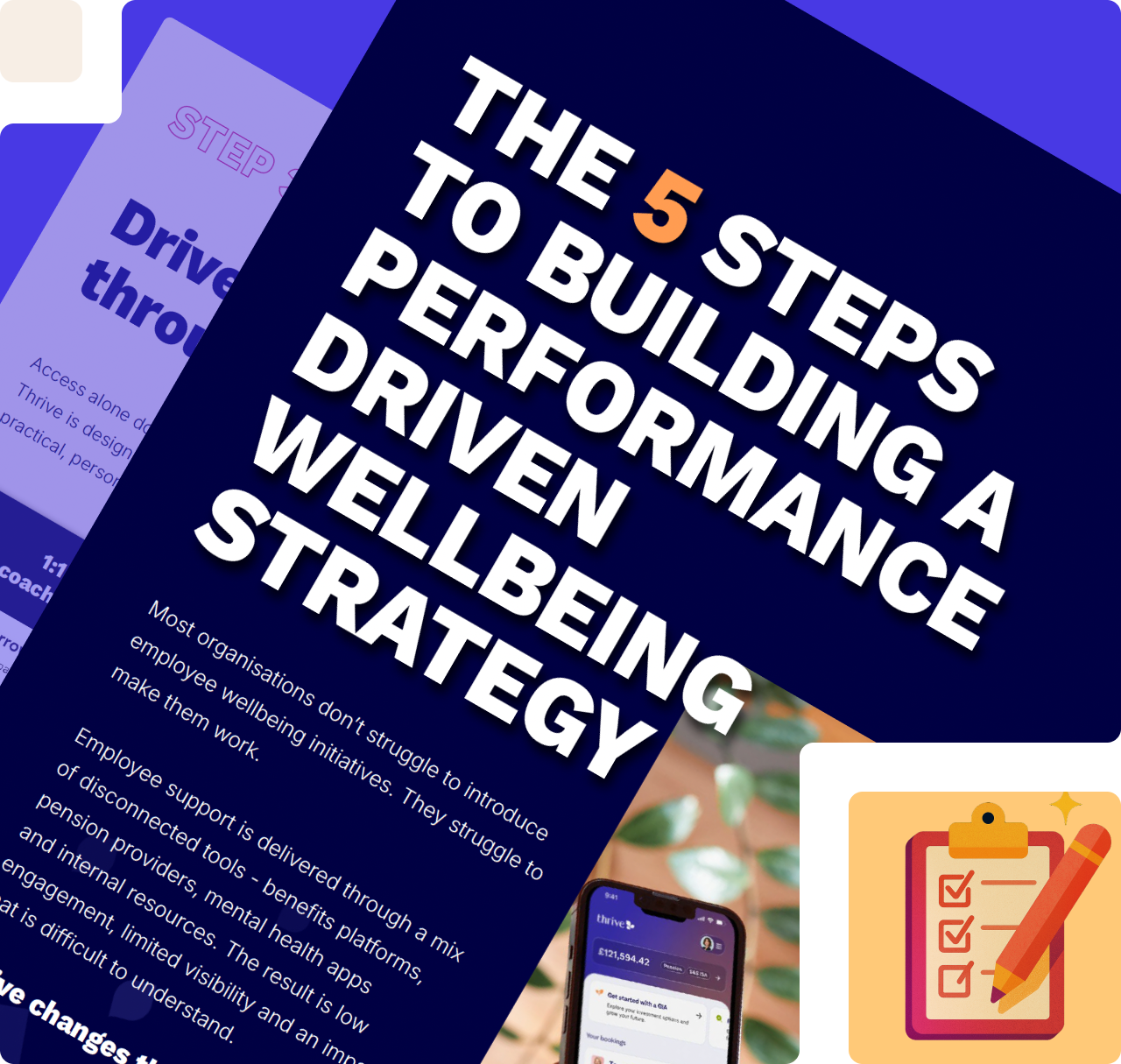
From Perks to Performance:

Is your financial wellbeing strategy actually driving performance?

Employee wellbeing shouldn’t just support people when they’re struggling. Done right, it can improve engagement, strengthen retention and help your people perform at their best.

‍From Perks to Performance explores why traditional financial wellbeing strategies are falling short - and the seven steps HR leaders can take to turn wellbeing into a measurable driver of business growth.

Inside the report, discover:

Why financial stress is a business performance issue - and the hidden cost it could be creating

Where wellbeing investment is being lost through poor awareness, access and engagement

The seven steps to building a growth-driven financial wellbeing strategy

How to connect employee needs with the outcomes your leadership team cares about

What to measure to demonstrate the business impact of employee wellbeing

Ready to move from perks to performance?
‍
Complete the form to access the report.
Thank you! Your submission has been received!
Oops! Something went wrong while submitting the form.

Wellbeing is now a business performance issue

Employee wellbeing is no longer just a people initiative. Financial pressure, burnout and disengagement are increasingly impacting workforce performance.

Yet many organisations still rely on fragmented benefits and disconnected wellbeing support that employees rarely engage with.

The organisations getting ahead are connecting wellbeing, engagement and financial support into a more strategic workforce performance model.

The hidden business impact

70%

Of employees

Say financial stress impacts them at work.
PwC Financial Wellbeing Report

£40k

Estimated productivity loss

For every £1m spent on payroll linked to poor financial wellbeing
PwC Financial Wellbeing Report

£4.70

Average ROI

For every £1 invested in employee wellbeing.
Deloitte analysis (2024)

A practical framework for building a connected wellbeing strategy

Understand the financial, emotional and operational pressures affecting your workforce - rather than relying on assumptions.

Define the business goal

Connect wellbeing strategy to the outcomes that matter most — engagement, retention, performance and growth.

Understand where pressure is building

The strongest wellbeing strategies are built on real workforce insight,  not guesswork. 

Reduce complexity and fragmentation

Disconnected providers, platforms and benefits create friction and reduce employee engagement with support.

Make support easier to access

Many wellbeing strategies fail because employees struggle to find, trust or use the support available.

See the full 7-step framework

Download the full guide to explore the complete framework and practical recommendations.

Download The Guide

Turning wellbeing strategy into practical action

The Thrive Playbook breaks the strategy down into five practical steps to help organisations build a more connected and measurable wellbeing strategy.

Designed for HR and People leaders focused on engagement, visibility and workforce performance.
What’s Inside:

Replacing fragmented providers with a more connected approach.

Improving engagement with wellbeing and benefits support.

Using data and insight to better measure impact.

Embedding wellbeing into everyday working life.

Building a more measurable wellbeing strategy.

Explore the practical framework behind the strategy