What needs to evolve next in employee financial wellbeing and benefits? Five priorities from EB Live 2026
Author: Ryan May, Benefits & Wellbeing Partner at Thrive by Blackfinch
Financial wellbeing is more than a buzzword.
It’s an essential part of building an Employee Value Proposition that truly supports your people before financial stress shows up in sickness absence, poor performance, low engagement and increasing employee turnover.
New research from Which found that 51% of UK households cut back on essentials, dipped into savings, sold possessions, or borrowed money in September 2026, while 7.1% of households missed a domestic bill, credit card payment, or mortgage/rent payment.
Gone are the days of reactive financial wellbeing programmes being enough to truly support employees, at every stage of life, no matter their earnings.
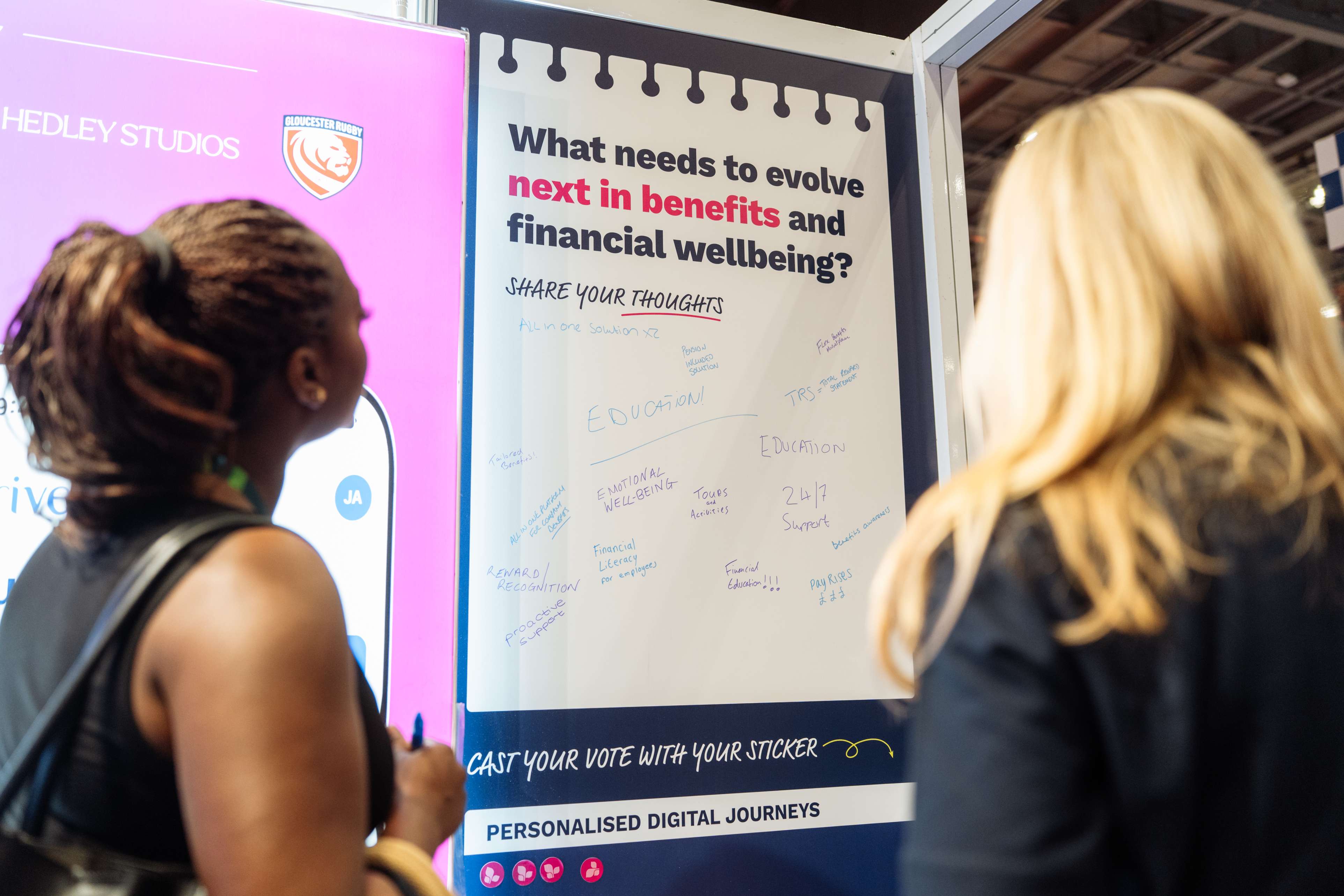
Which is why at Employee Benefits Live 2026, the Thrive team asked HR leaders what they believe needs to evolve next in financial wellbeing and employee benefits.
Five main themes emerged, which we’ll explore in more detail:
- Building confidence through financial education
- Personalised support
- Making the value of benefits visible
- Simplifying the experience
- Giving employees more flexibility
At Thrive, we believe financial wellbeing means helping employees build confidence in managing everyday money, prepare for unexpected expenses and plan for the future. Here’s what we heard at EB Live, alongside practical steps employers can take.

Building confidence through financial education
Financial education stood out on our EB Live ideas board. Visitors called for greater financial literacy, practical knowledge and relevant learning materials. The message was clear: employees need help understanding the financial decisions they face and knowing where to start.
That might mean understanding a payslip, setting a realistic budget or learning how a workplace pension works. People arrive with different levels of knowledge and confidence, so education needs to offer approachable entry points. Clear explanations and everyday examples can make a topic feel manageable enough to explore.
For employers, a practical starting point is an anonymous survey asking employees which money topics they would find most useful. Choose one priority and build a short learning campaign around it, pairing an explanation with an action, such as reviewing regular spending. Ask afterwards whether employees feel better equipped to take that step.
Thrive Academy gives employees access to short videos, tools and lessons covering topics such as budgeting, goal setting and retirement planning. Available through the Thrive app, it lets people explore relevant subjects at their own pace and revisit them when a question arises.
Connecting learning with a practical task can help employees put that knowledge to use. An employer might, for example, highlight pension education alongside a reminder to check their contribution level. With financial education and workplace pensions in one platform, Thrive helps make that connection easier to navigate.
Personalised support
‘Personalised education’, ‘tailored benefits’ and ‘personalised human coaching’ all appeared on the board. Visitors also highlighted the connection between financial, mental and physical health, including the importance of offering help before difficulties escalate. These contributions point to a need for support that takes account of the person behind the financial question.
Access to information is only part of the answer. Even with AI and online resources readily available, an employee may still need a confidential conversation to make sense of their circumstances. Two colleagues on the same salary could face very different pressures, priorities and responsibilities.
Employers can make a practical difference by explaining what personal support involves, who can use it and how confidentiality works. A communication answering “What happens in a financial coaching session?” can make taking the first step feel less daunting. Remind employees that they can seek support while planning ahead, as well as when something feels difficult.
Thrive offers confidential, human, one-to-one financial wellbeing coaching to help employees explore everyday money questions and identify manageable next steps. As Thrive’s expert financial coach Alina P. Burlacu, founder of Healthy Money Mind, explains, employees do not need to arrive “knowing the right terminology, having perfect spreadsheets or even knowing exactly what question to ask.”
She adds:
“Helping someone make sense of where they are - without judgement, jargon or pressure - and turn uncertainty into greater clarity and manageable next steps is very much where I believe coaching can be at its most valuable.”
Coaching provides education and guidance; where employees need regulated financial advice, Thrive can connect them with qualified financial advisers.
Explore Thrive’s 1:1 coaching, speak to the team >>

Making the value of benefits visible
‘Visibility’, ‘benefits awareness’ and ‘total reward statement’ were among the contributions at EB Live. These ideas raise an important question for employers: how well do employees understand the support already available to them? A package can contain valuable benefits while still being difficult for people to explain or appreciate.
Visibility means showing where a benefit can make a difference. An employer pension contribution supports future planning, while a discount may help with an everyday purchase. Explaining that relevance gives employees a reason to pay attention beyond the name of a provider or a list in an onboarding document.
Try a simple benefits awareness check. Ask a small group of employees which benefits they can name, what they think those benefits do and where they would go to access them. Use the gaps to shape regular communications, each focusing on one benefit, who it could help and how to use it. A clear total reward summary can also help put employer-funded benefits in context alongside salary.
Thrive brings employee benefits, coaching and financial wellbeing support together, giving employees a central place to discover what’s available. Its benefits offering includes pensions, discounts and cashback, helping employers highlight opportunities for employees to make their money go further alongside support for longer-term financial goals.
Employers can use engagement insights to inform what they communicate next. If a benefit receives little attention, it is worth checking whether employees understand it and can find it before deciding it has little value. Thrive’s engagement insights can support those conversations and help teams make more informed decisions about their offering.
Make more of your benefits offering - book a demo >>
Simplifying the experience
Several visitors asked for an ‘all in one solution’, while others wanted fewer online journeys, reduced administration and greater simplicity. This theme concerns what happens after an employee knows a benefit exists: how much effort does it take to use it?
Every extra search, unclear instruction or hand-off can make that journey harder. For HR teams, managing separate provider touchpoints can also mean more time answering access questions and explaining processes. Improving the experience starts with understanding where that effort sits.
Choose one common task and test it from an employee’s perspective, such as finding financial coaching or accessing an existing benefit. Count the steps, note any confusing language and check the experience on a phone. Fix the biggest obstacle first, whether that is an outdated link, an unclear instruction or uncertainty about whom to contact.
Thrive brings employee benefits, coaching and financial wellbeing into one connected digital platform. Employees have a central starting point for exploring support, learning about money and finding help, with mobile access that makes resources available beyond a desktop at work.
For employers, Thrive’s connected approach also aims to reduce administration and the number of systems and provider touchpoints involved. A demo is an opportunity to explore how it could fit your existing arrangements and where it could simplify the tasks that currently take up your team’s time.
See the Thrive experience - book a demo >>

Giving employees more flexibility
‘Flexible choices’, ‘support for family life’ and ‘give employees time back’ brought another dimension to the board. These contributions suggest that the next evolution needs to consider how benefits work around employees’ lives, including the time and responsibilities they manage outside work.
Flexibility can mean having a choice of relevant benefits, being able to learn at a convenient time or having space to attend a support appointment. An employee balancing caring responsibilities may value those options differently from someone preparing to buy a first home. Employers need ways to hear those differences without making assumptions based on age, salary or job title.
Start by asking employees where their current arrangements create friction. Could they access a coaching appointment during working hours? Can colleagues working different shifts find the same learning resources? Pair those questions with a review of your leave and flexible working policies, so that access to support is realistic as well as technically available.
Thrive supports choice through a benefits marketplace that helps employers develop their offering, alongside financial education employees can explore at their own pace. Employees can use digital resources when convenient and access human coaching when they want to discuss their own priorities in more detail.
Technology works best alongside an employer culture that gives people time to use the support on offer. Consider allowing protected time for financial learning or a coaching conversation, and make that permission clear. Thrive can help bring the resources and support together; employers can help ensure employees have the opportunity to benefit from them.
Explore support that fits your workforce - book a demo >>
What could evolve next in your organisation
Thank you to everyone who added an idea or joined a conversation at our EB Live stand. Your contributions gave us a useful starting point for thinking about how financial wellbeing and benefits can become more relevant and easier to use.
Choose one of these five priorities and look at your current offering through your employees’ eyes. Where is the biggest gap between the support you provide and the experience people have of using it?
Book a demo with the Thrive team to discuss that challenge and see how our connected approach to financial wellbeing, coaching and benefits could support your next step.